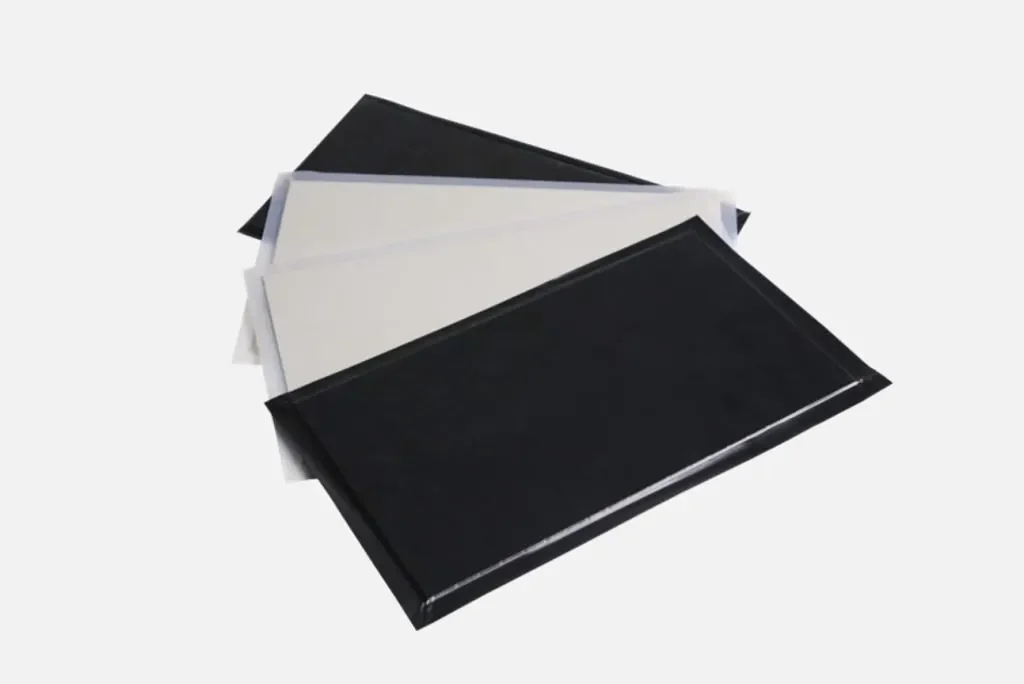
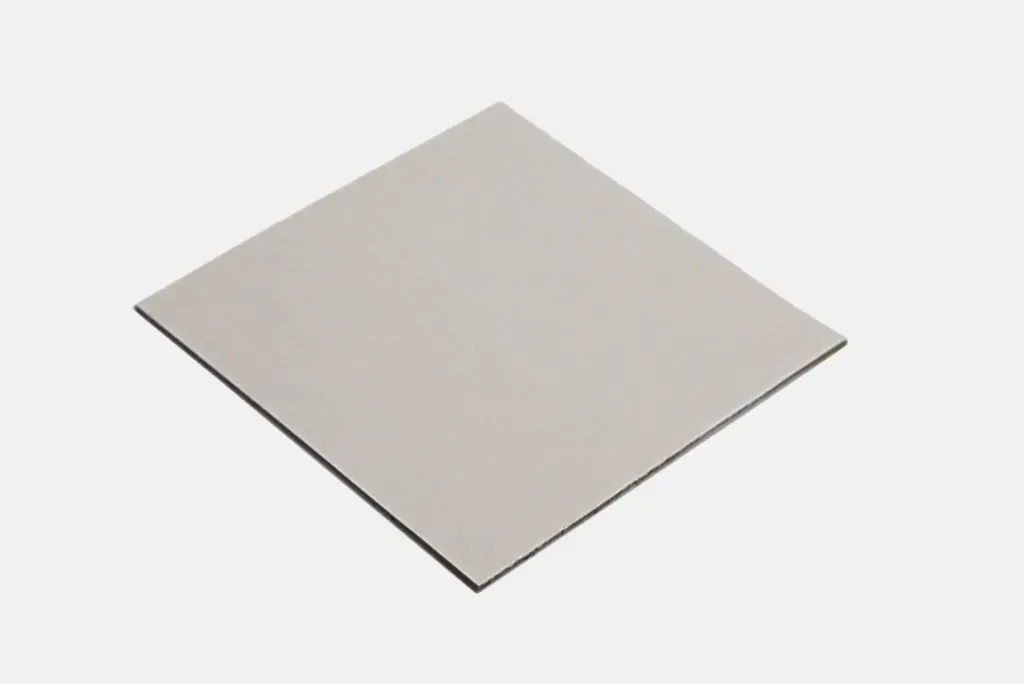
Our Ultra-thin Microporous Insulation Panel is designed for cell-to-cell applications, delivering exceptional fireproof and thermal insulation performance to prevent thermal runaway propagation between cells in EVs and Energy Storage Systems (ESS). Compared with existing solutions, our product offers much lower thermal conductivity at high temperatures—providing better thermal protection while enabling a thinner material thickness that maximizes valuable space for battery pack system design.
Thermal runaway occurs when internal battery chemical reactions cause a rapid temperature increase, initiating a chain reaction. This phenomenon can result in overheating, smoke, fire, or explosion, posing substantial risks to personal safety and property. Furthermore, thermal runaway may propagate to adjacent battery cells, potentially expanding into larger-scale fires.
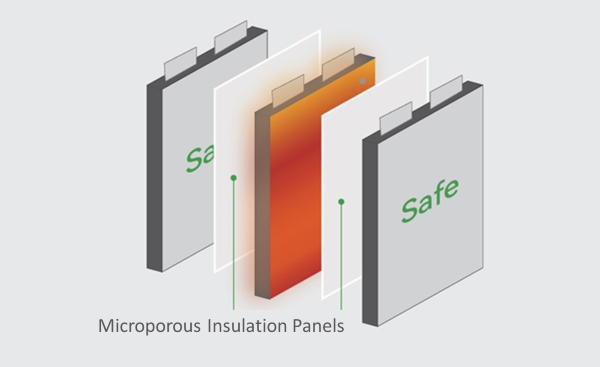
Microporous insulation is crucial for thermal runaway protection, it provides exceptional thermal resistance in an extremely thin, lightweight form. Its microporous structure and the use of opacifiers minimizes all three modes of heat transfer - conduction, convection, and radiation - delaying the spread of excessive heat between battery cells. This critical delay helps contain a thermal event within a single cell, preventing it from spreading through the entire battery pack and allowing more time for safety systems to activate.
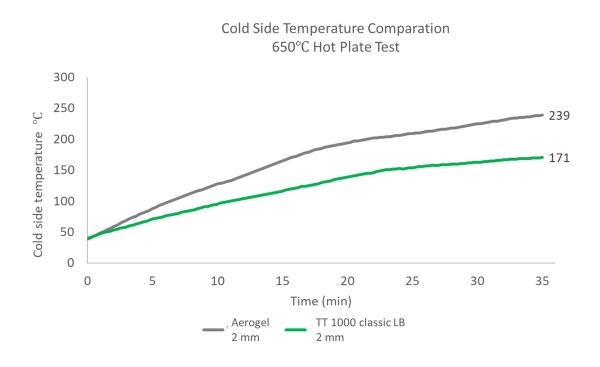
Thermal Insulation Performance Multiple Times Superior to Aerogel Blankets
Microporous insulation materials deliver multiple times superior thermal performance compared to aerogel blankets at elevated temperatures, while offering higher temperature resistance.
Excellent Flame-retardant Performance
Inorganic, non-combustible material rated UL 94 V-0.
Good Mechanical Performance
Its mechanical performance as a compression pad helps to maintain the correct pressure on the battery pack. The compression performance of our materials can be precisely tuned through recipe adjustments and density control. Additionally, compression characteristics can be enhanced by compositing with various elastic materials
Dielectric Stability and Isolating
Our microporous insulation barriers provide superior dielectric and aging resistance.
Our naked panels withstand 3500V DC with a maximum leakage current of ≤ 0.1 mA, ensuring high dielectric insulation quality.
Thin and Lightweight
We offer lightweight, thin battery system solutions with material thicknesses down to 0.8 mm. Our products support highly customizable dimensions; meeting demands for both weight reduction and tailored configurations.
Robust and Environmentally Friendly
Our solutions are not influenced by normal operating conditions and not impacted by humidity. No harmful substance emissions and no smoke in case of fire.
Our microporous insulation products effectively contain thermal runaway propagation in electric vehicles (EVs) and energy storage systems (ESS). Engineered for demanding applications, our thermal runaway barriers offer customizable performance through solution-based design, with primary applications including:
Expert of Microporous Insulation Materials
From formulating to part manufacturing, our cell-to-cell (C2C) barriers are designed, engineered, and produced by ourselves.
Trusted, Proven Record of Projects in EV and ESS
Our microporous insulation panels for cell-to-cell barriers are in volume production for major players in the market.
Engineering Support
Our solutions are tailored to meet your specific needs, offering engineered thermal management design and customized sizes for battery platforms.
Fast Response and Deliveries
With manufacturing facilities in China and Malaysia, we maintain strong production capabilities to guarantee timely and reliable deliveries.
TT 1000 classic LB is an ultra-thin microporous insulation panel with customized outer coverings. It is an ideal choice for creating excellent thermal insulation and fire protection properties for...
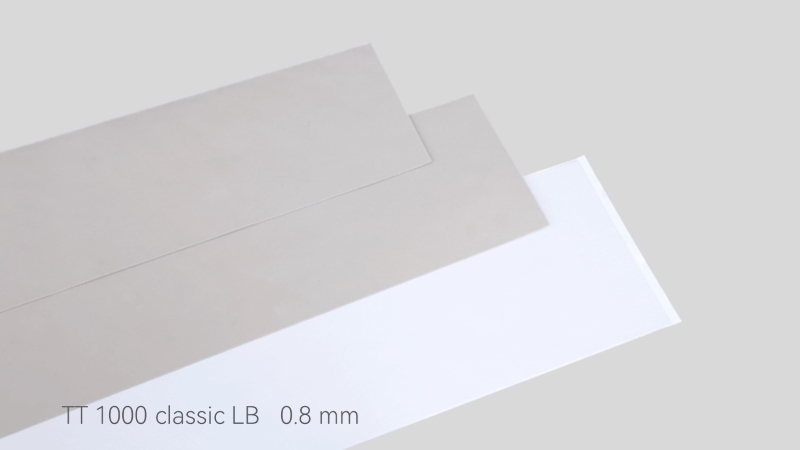
TT 1000 classic LB is an ultra-thin microporous insulation panel with customized outer coverings. It is an ideal choice for creating excellent thermal insulation and fire protection properties for lithium-ion batteries. Compared to aerogels, our product offers superior temperature resistance and thermal stability, lower thermal conductivity at high temperatures, and the advantage of being smoke-free.
Due to its best-in-class thermal insulation and fireproofing properties, TT 1000 classic LB is a new-generation thermal barrier that replaces aerogels and other traditional products in preventing thermal runaway in electric vehicles and Battery Energy Storage Systems (BESS).
Typical applications:
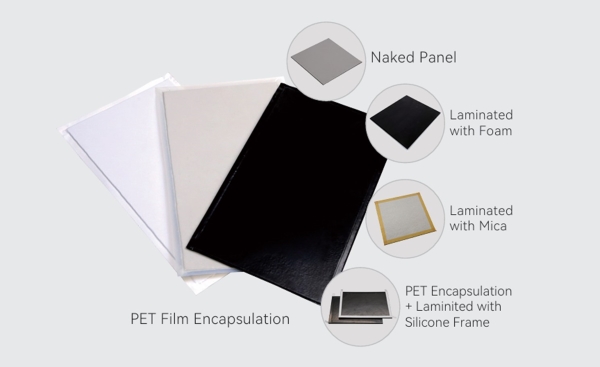
Product options:
A leading commercial vehicle manufacturer was developing a high-energy-density battery pack for long-haul electric trucks. The highly integrated chassis design and compact battery architecture left extremely limited space between prismatic cells for thermal protection materials.
During battery pack development, the customer found that aerogel-based thermal barriers could not provide the required thermal protection performance within the available installation thickness. The project therefore required an ultra-thin insulation material capable of delivering excellent thermal insulation performance without increasing battery pack size or compromising energy density.
The battery pack design required a thermal protection material that could:
Unicorn supplied a customized 0.8 mm microporous insulation core that successfully met the customer's hot plate thermal insulation and flame exposure test requirements. After PET film encapsulation, the complete thermal barrier solution achieved an overall thickness of less than 1 mm, providing excellent thermal protection while supporting automated battery pack assembly.
Superior Thermal Runaway Protection
The ultra-thin microporous insulation delivers outstanding high-temperature thermal insulation performance, with a maximum continuous service temperature of 1200°C and a thermal conductivity of ≤0.038 W/m·K at a mean temperature of 800°C. This effectively mitigates cell-to-cell thermal propagation during thermal runaway events.
Enabling Higher Energy Density Battery Pack Designs
Available in ultra-thin configurations down to 0.8 mm, the solution provides highly effective thermal protection within extremely limited installation space, helping maximize battery pack energy density without increasing overall pack dimensions.
Ultra-thin Design with Reliable High-Volume Manufacturing Capability
Unicorn's advanced manufacturing process enables the production of 0.8 mm ultra-thin microporous insulation panels with excellent thickness consistency and stable thermal performance. Optimized material formulations and manufacturing processes also provide enhanced flexibility and improved handling during assembly, supporting reliable high-volume production and efficient battery pack manufacturing.
A leading energy storage system integrator was developing a containerized lithium-ion Battery Energy Storage System (BESS) for overseas grid applications. The 20-foot container incorporated a 5 MWh rack-based battery architecture using high-density 314 Ah LFP cells. As battery capacity continued to increase within a fixed container footprint, the customer required an ultra-thin thermal barrier capable of delivering superior thermal resistance without compromising energy density or system integration.
The battery architecture required a thermal interlayer capable of meeting the following technical requirements:
Unicorn supplied a customized 1.35 mm TT 1000 Classic LB microporous insulation core engineered to meet the customer's thermal insulation and mechanical performance requirements for cell-to-cell thermal protection. The material successfully passed the customer's specified 1200°C flame exposure test and 675°C heated compression test, demonstrating outstanding high-temperature insulation performance and structural stability. The optimized core material was also designed for downstream encapsulation and converting processes, enabling seamless integration into the customer's battery module manufacturing system.
Reliable Thermal Protection for Utility-Scale Energy Storage
The microporous insulation core provides stable thermal insulation performance under extreme high-temperature conditions, combining excellent temperature resistance with exceptionally low thermal conductivity. This enables battery manufacturers to implement highly effective cell-to-cell thermal protection solutions for large-scale energy storage systems.
Excellent Compatibility with Downstream Processing
The microporous insulation core can be customized in thickness, dimensions, and mechanical properties to meet a wide range of battery module design requirements. Its excellent processability ensures compatibility with customer-specific encapsulation, laminating, and converting processes, providing maximum flexibility for different thermal barrier constructions.
Consistent Material Quality for High-Volume Manufacturing
A robust and stable manufacturing process ensures consistent thickness, thermal performance, and dimensional accuracy across production batches. This supports reliable material supply and efficient downstream processing for large-scale BESS manufacturing.
Supporting Safe and Compact Energy Storage System Designs
By combining outstanding high-temperature resistance, excellent thermal insulation performance, and an ultra-thin structure, the material enables battery system designers to optimize both thermal safety and space utilization in next-generation, high-capacity energy storage systems.
Thermal runaway is a phenomenon where internal chemical reactions within a battery cell cause a rapid temperature increase, triggering a chain reaction. This can lead to overheating, smoke, fire, or explosion. Effective thermal runaway protection is critical for preventing propagation between cells, containing the event, and allowing time for battery safety systems to engage.
Our microporous insulation provides superior thermal stability and higher temperature resistance compared to traditional insulators. More importantly, it offers significantly lower thermal conductivity at high temperatures, ensuring lower cold-face temperatures and stronger protection at the same thickness. Alternatively, under the same thermal insulation requirements, our material achieves a thinner profile, saving more space for battery packs.
Microporous thermal barriers reduce heat transfer through the combined effect of their highly porous structure and infrared opacifiers, which minimize heat transfer by conduction, convection, and radiation. When installed between battery cells, these materials help reduce heat transmission from a thermal event cell to neighboring cells, delaying thermal propagation and supporting safer battery system designs.
Our microporous insulation materials are available in ultra-thin configurations down to 0.8 mm, designed for applications where space efficiency is critical. Thinner configurations are currently under development and validation to support battery pack designs with increasingly stringent space constraints.
Yes. Our microporous insulation barriers offer superior dielectric and aging resistance. Our core panels withstand 3500V DC with a maximum leakage current of ≤0.1 mA, ensuring high-quality electrical insulation.
Yes. We provide customized microporous insulation materials based on customer requirements, including thickness, dimensions, density, and mechanical properties.
Beyond thermal performance, the compression characteristics of our microporous insulation core can also be customized to meet specific battery module requirements. Through material structure optimization, the core can achieve enhanced flexibility and compression adaptability, with performance comparable to ceramic fiber aerogel in demanding applications.
Yes. Our materials are inorganic and non-combustible, holding a UL 94 V-0 rating certificate (Yellow Card), which ensures maximum flame retardancy in demanding EV and energy storage applications.
Yes. Our microporous insulation materials have been validated through thermal runaway propagation tests in both power battery and energy storage applications. In tests using 314Ah LFP cells, our 1.3 mm insulation panel effectively prevented thermal propagation from the triggered cell to adjacent cells, which remained intact and functional after testing.
In addition, customized insulation materials have been successfully validated in customer thermal runaway tests involving NMC battery cells and large-format energy storage cells above 500Ah. Our materials have been supplied for multiple GWh-scale energy storage projects and power battery applications, supporting customers in developing safer battery systems.
Microporous thermal barriers are used in the following key areas:
Cell-to-cell insulation – Between adjacent cells.
Module-level protection – Used within battery modules to enhance thermal isolation.
Between battery and casing – Used as a thermal barrier between battery components and external structures.